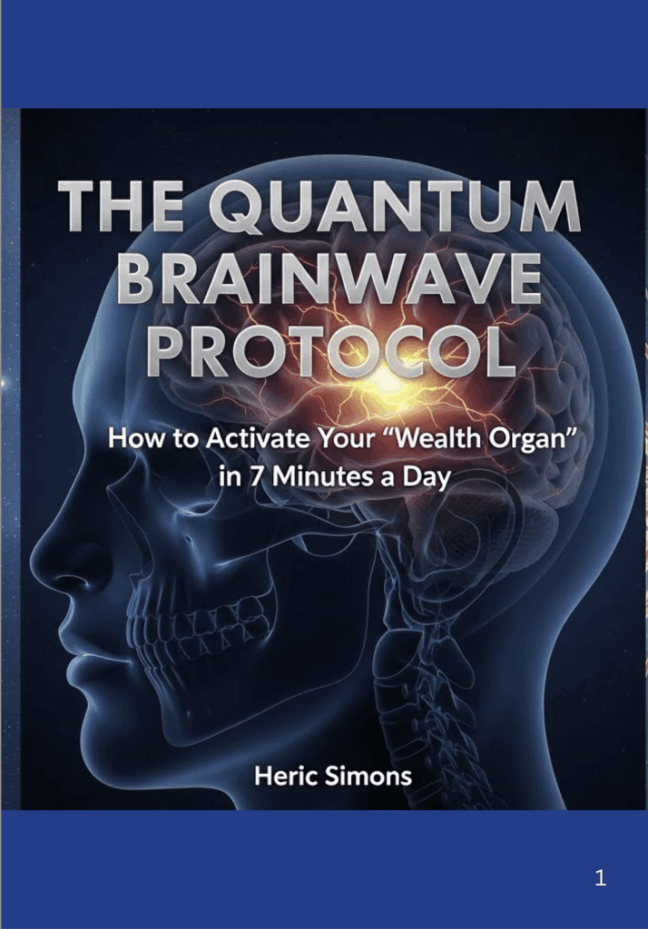
Quantum Brainwave Protocol uses 7-minute audio tracks and brainwave entrainment to reduce stress, sharpen focus, and restore deep sleep. Backed by a 60-day guarantee.
Built on peer-reviewed neuroscience rather than motivational theory, it works through the brain's documented tendency to synchronize with external sound frequencies — no meditation skills, no supplements, and no complicated routines required. Three precisely engineered audio tracks, seven minutes a day, and a 60-day money-back guarantee.
"For almost six years, I woke up every morning already exhausted. Not physically — mentally. Like my brain had been running overnight and never actually shut down. I tried journaling, I tried therapy, I even tried one of those expensive meditation apps everyone was raving about. Nothing stuck. A colleague mentioned Quantum Brainwave Protocol almost casually, and honestly I only tried it because it was cheaper than my weekly coffee habit. The first morning I used the 7-minute track, I noticed something small but real — the mental chatter quieted down faster than usual. By the end of week two, I was waking up before my alarm, actually looking forward to starting work. I'm not saying it rewired my entire life overnight. But something shifted, and I hadn't felt that kind of mental clarity in years."
"I built my business through sheer stubbornness, but by 2023 I was running on fumes. Couldn't focus for more than twenty minutes without my mind drifting to worst-case scenarios — cash flow, competition, all of it. My decision-making got sloppy because my brain was permanently in crisis mode. A friend sent me the link to Quantum Brainwave Protocol and I was skeptical, to put it mildly. I'm a numbers guy. But the Frequency Following Response explanation made enough sense that I gave it two weeks. What surprised me wasn't some dramatic transformation — it was the subtlety of it. The anxiety dial turned down. I started seeing solutions in problems I'd been avoiding for months. The Deep Sleep track genuinely changed how I wake up in the morning. After years of grinding harder and getting diminishing returns, something as simple as a 7-minute audio routine wasn't what I expected to make the difference."
"Creative block is a special kind of torture when your income depends on original ideas. Mine lasted nearly three years. I'd sit at my desk and feel nothing — no spark, no direction, just pressure. I went through the usual suspects: new routines, digital detox, even changed my diet. Some things helped a little. None of them touched the root of it. I came across Quantum Brainwave Protocol through a forum thread and downloaded it mostly out of desperation. The first week felt subtle — slightly better sleep, slightly less dread in the mornings. But around Day 10, something genuinely shifted. Ideas started coming back, not forced but natural, the way they used to before the burnout set in. I still use the Genius Focus track before every major project. It doesn't do the work for me — but it puts me in a state where the work actually flows."
Quantum Brainwave Protocol is a structured audio program built around a single, somewhat counterintuitive idea: that the reason most people feel mentally stuck has less to do with effort or attitude, and more to do with the specific frequency their brain is running on most of the day.
The program consists of three audio tracks — each engineered to target a different brainwave state. The core track runs for just 7 minutes and is designed to shift the brain from Beta (the stress-dominant frequency most adults are locked into) toward Theta, the frequency associated with creativity, intuition, and deeper cognitive openness. The other two tracks address sleep quality and focused performance respectively, using Delta and Gamma frequencies.
What separates this from generic "relaxation audio" is the underlying mechanism it relies on — a physics principle called Entrainment. When the brain is exposed to a sound frequency that mathematically corresponds to a target brainwave state, it tends to synchronize with that frequency. This isn't a metaphysical claim; it's rooted in what neuroscientists call the Frequency Following Response. The audio doesn't ask your brain to relax — it essentially gives it no choice.
The protocol was refined in a professional studio with sound engineers experienced in binaural beats and isochronic tones. It's delivered as a digital download — no apps, no subscriptions, no equipment beyond a pair of headphones (though speakers work too).
At its core, Quantum Brainwave Protocol is designed for one specific person: someone who feels like they're putting in real effort but not seeing real results — and suspects the problem might not be strategy, but the mental state they're operating from.
Quantum Brainwave Protocol wasn't created to add another wellness product to an already crowded market. It was created to address something specific — a gap that existing solutions weren't honestly filling.
The Problem That Started Everything
The people who eventually developed this protocol kept observing the same pattern: intelligent, hardworking adults who were doing everything right — setting goals, staying disciplined, consuming the right information — and still feeling stuck. Not stuck in an abstract, motivational sense. Stuck in a way that felt biological. Like the engine was running but something in the transmission wasn't connecting.
The conventional solutions available to these people fell into two categories. Either they addressed mindset — journaling, affirmations, therapy, coaching — or they addressed the body — sleep hygiene, nutrition, exercise. Both categories have genuine value. But neither was targeting the actual operating frequency of the brain itself. Nobody was asking the more fundamental question: what if the problem isn't what you're thinking, but the neurological state you're thinking from?
The Research That Changed the Direction
The turning point came from studying existing neuroscience research — particularly around brainwave states and the measurable impact of chronic stress on brain function. The data on cortisol and hippocampal health was already there in the scientific literature. So was the research on Theta waves and their relationship to creativity and cognitive openness. And the Frequency Following Response — the brain's documented tendency to synchronize with external sound frequencies — had been studied for decades.
What hadn't been done was packaging these principles into something practical, accessible, and genuinely usable by someone with no background in neuroscience and no time to spend an hour meditating every morning.
The NASA research involving Dr. George Land and Beth Jarman was particularly striking — the finding that 98% of children test as creative geniuses but only 2% of adults retain that capacity. That number reframes the entire conversation. It means the cognitive decline most people attribute to aging or circumstances is largely a frequency problem. And frequency problems, unlike character flaws or intelligence gaps, are actually addressable.
The Design Philosophy
The protocol was built around one non-negotiable constraint: it had to work for people who had already tried everything else and were running low on patience for complicated systems. That meant no lengthy meditation sessions requiring years of practice. No expensive equipment. No lifestyle overhaul as a prerequisite. The 7-minute format wasn't chosen arbitrarily — it was chosen because it's the minimum effective dose that produces a measurable Theta shift, and because it's short enough that there's no realistic excuse to skip it.
The decision to work with professional sound engineers experienced in binaural beats and isochronic tones — rather than using off-the-shelf relaxation audio — came from the same philosophy. If the mechanism is frequency entrainment, the audio quality and precision of the frequencies matter enormously. A poorly engineered binaural track doesn't just underperform — it can produce the wrong neurological effect entirely.
What It Was Never Meant to Be
Quantum Brainwave Protocol was deliberately not designed as a motivational product. It makes no promises about attitude, positivity, or mindset shifts through content consumption. The premise is more mechanical than that — and intentionally so. The creators understood that the audience they were building for had heard enough motivational content. What they needed wasn't more inspiration. They needed a tool that worked at the level where inspiration actually becomes possible: the neurological baseline.
That's the honest reason this protocol exists. Not to sell a dream, but to address the specific biological condition that makes the dream feel permanently out of reach.
The phrase "inner genius" sounds motivational. But there's a more literal, neurological meaning behind it — and understanding that meaning changes how you think about what sound can actually do to your brain.
First, What "Genius" Actually Means Neurologically
The word genius gets used loosely, but in the context of brainwave research, it refers to something specific and measurable: the capacity for divergent thinking, spontaneous insight, and the kind of creative problem-solving that produces non-obvious solutions. This isn't a personality trait. It's a cognitive state — one that's directly tied to which brainwave frequency your brain is operating on at any given moment.
The NASA research involving Dr. George Land makes this concrete. When 98% of five-year-olds test as creative geniuses, the variable isn't IQ, genetics, or talent. It's frequency. Children naturally spend significant portions of their day in Theta — the brainwave state where divergent thinking, intuition, and spontaneous insight are neurologically possible. Adults don't lose the capacity. They lose the frequency access.
Activating your inner genius, then, isn't about unlocking some hidden potential through willpower or inspiration. It's about recreating the neurological conditions under which that capacity already naturally operates.
The Genius State Has a Specific Address: Theta
Theta waves sit between 4 and 8 Hz — slower than the alert, analytical Beta state most adults live in, but faster than the deep sleep Delta state. Theta is the frequency of the hypnagogic zone: that brief window between waking and sleeping where solutions to problems you've been wrestling with for days suddenly appear without effort.
Most people have experienced this. You've been stuck on something for hours, you stop trying, you lie down — and the answer arrives. That's not magic. That's your brain briefly slipping into Theta when it's released from the grip of Beta.
The problem is that for most adults, Theta access is accidental and fleeting. It happens in those transitional moments but rarely during the hours when you actually need it — while working, creating, planning, or making decisions. The chronic Beta dominance of modern life keeps the brain locked in a frequency range that's useful for reacting but limited for genuine creative thinking.
Soundwaves don't give you genius. They give you back the frequency where your existing cognitive capacity can actually function at full depth.
How Sound Reaches the Brain's Frequency Controls
Your brain doesn't passively receive sound. It actively processes it — and that processing has measurable effects on its own electrical activity. This is the Frequency Following Response in action: the brain's tendency to synchronize its dominant frequency with rhythmic external stimuli.
Think of it like this. If you've ever found yourself unconsciously tapping your foot to a beat, that's a mild version of the same phenomenon — your motor system entraining to an external rhythm. The Frequency Following Response is that principle operating at the level of brainwave activity itself. When the auditory cortex processes a rhythmic signal at a frequency corresponding to Theta, the brain's electrical activity begins to drift toward that frequency.
What makes engineered soundwaves — specifically binaural beats and isochronic tones — more effective than ordinary music for this purpose is precision. A song might move you emotionally and even shift your mood, but it doesn't deliver a mathematically specific frequency signal to your auditory cortex. Engineered entrainment tracks do. The frequency isn't approximate — it's calculated to land in the exact Hz range that produces the target brainwave state.
The Auditory Pathway to Theta: Step by Step
Understanding the sequence helps demystify why this works:
Step 1 — The signal enters through sound: The entrainment track delivers two slightly different tones — one to each ear through headphones. The left ear might receive 200 Hz, the right ear 207 Hz.
Step 2 — The brain creates the entrainment frequency internally: The brain processes the 7 Hz difference between the two tones and perceives it as a distinct rhythmic pulse. This 7 Hz signal — sitting squarely in the Theta range — is generated inside the brain itself, not in the audio file.
Step 3 — The Frequency Following Response activates: The brain's electrical activity begins to synchronize with the internally generated 7 Hz signal. EEG measurements taken during binaural beat exposure consistently show increased Theta wave activity within minutes of the process beginning.
Step 4 — Cognitive shift follows the frequency shift: As Theta activity increases, the neurological conditions associated with creative thinking, intuitive pattern recognition, and reduced cognitive rigidity become active. The mental chatter quiets — not because you forced it to, but because Beta activity is being displaced by a slower, more expansive frequency.
Step 5 — The "genius state" becomes accessible: With Beta dominance reduced and Theta activity elevated, the brain can access modes of thinking that chronic stress had been suppressing. Ideas connect more fluidly. Solutions appear with less effort. The cognitive field widens.
Why This Works When Meditation Doesn't for Most People
Traditional meditation produces Theta — but it requires the practitioner to achieve mental quietude through sustained effort and practice. For someone whose brain is deeply entrenched in High Beta, that's a significant neurological ask. Trying to meditate from a chronic stress baseline is a bit like trying to fall asleep by concentrating very hard on falling asleep. The effort itself maintains the state you're trying to exit.
Soundwave entrainment bypasses this problem entirely. You're not trying to produce Theta through mental discipline. The audio signal produces it for you through a direct neurological mechanism. The brain follows the frequency not because you're skilled at relaxing, but because the Frequency Following Response is an involuntary biological process. It happens whether or not you're good at meditating, whether or not you've been stressed all morning, and whether or not you believe it will work.
This is the meaningful practical difference between soundwave-based entrainment and meditation for most people — particularly beginners or those with high chronic stress loads. The entry barrier is essentially zero.
The Compounding Effect: Why Daily Use Matters
A single 7-minute session produces a temporary Theta shift — real and measurable, but temporary. What changes with consistent daily use is the brain's baseline. Neuroplasticity — the brain's capacity to physically reorganize itself in response to repeated experience — means that regular Theta entrainment gradually makes Theta more accessible even outside of listening sessions.
Over days and weeks of consistent use, users report that the mental clarity and creative openness they initially experienced only during or immediately after the track begins to extend further into their day. The brain, repeatedly guided into Theta, starts to find its way there more readily on its own. The genius state stops being something you have to schedule and starts becoming a more natural part of how your mind operates.
That's not a marketing claim. That's neuroplasticity working exactly as the research says it should.
When you purchase Quantum Brainwave Protocol today, three additional resources are included at no extra cost. These aren't filler bonuses thrown in to inflate the offer — each one is designed to work alongside the audio tracks at a specific point in your daily routine.
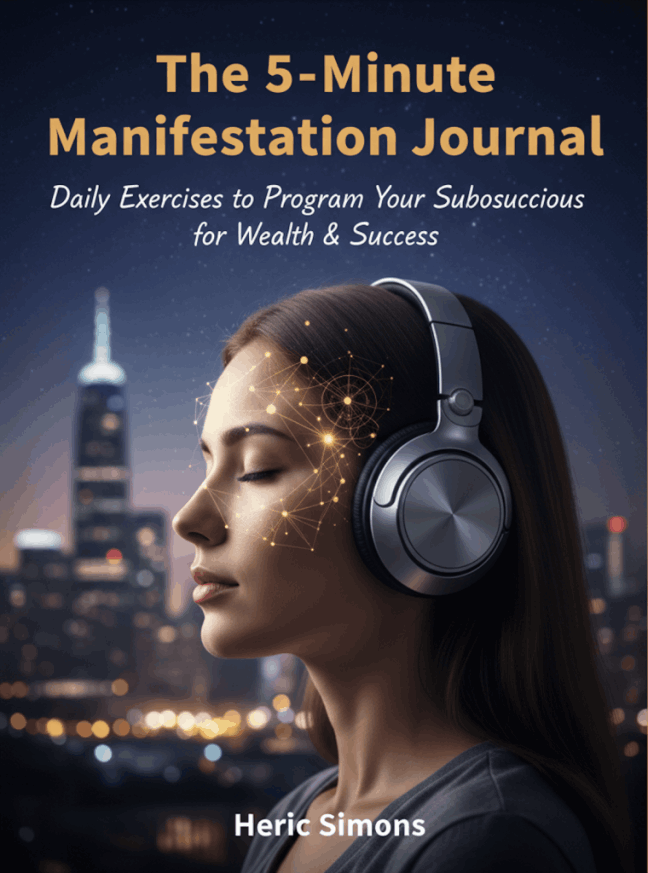
This is a printable workbook, and the timing of when you use it matters more than the journal itself. The instruction is to write in it immediately after completing the 7-minute Wealth Frequency track — while your brain is still in the Theta state the audio just created. The idea is straightforward: Theta is when the brain is most receptive, so goals and intentions written during that window have a stronger imprint on your subconscious than goals written at a random point in the day. Five minutes, right after the track ends. That's the whole system.
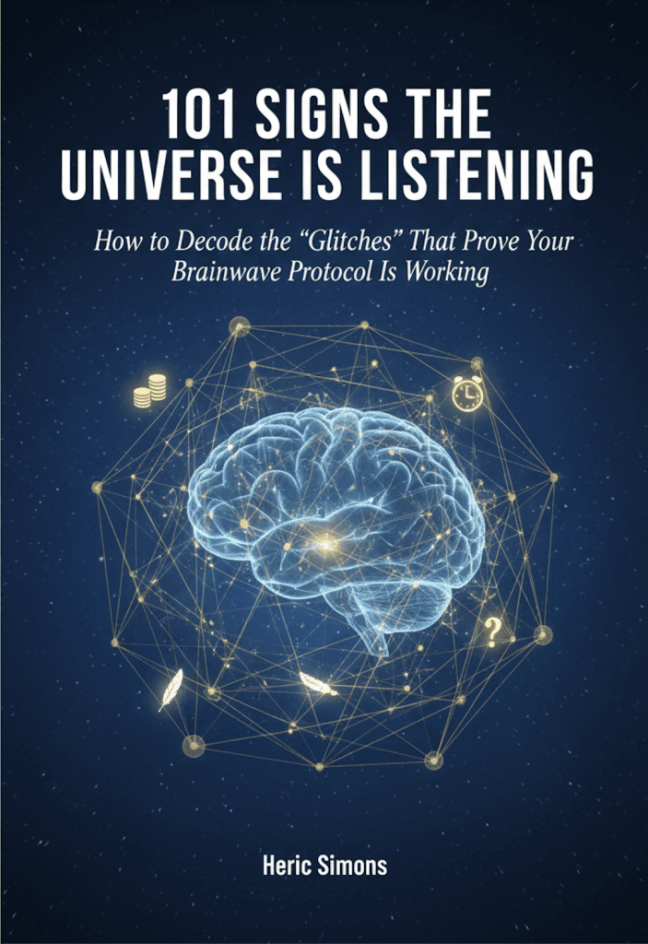
This is a checklist-style guide focused on what the program describes as "awareness markers" — small, easily dismissed things like repeating numbers, unexpected coincidences, or finding objects in unusual places. Most people notice these things and brush past them. This guide reframes them as signals worth paying attention to, particularly as your brain begins shifting out of chronic Beta and into a more open, receptive state. Whether you interpret this through a spiritual or purely psychological lens, the practical function is the same: it trains you to notice opportunity patterns you'd previously filtered out.
This is the quick-start guide that explains the neuroscience behind the protocol — the Frequency Following Response, brainwave states, and how entrainment works — without requiring any prior knowledge. More practically, it lays out a daily schedule showing exactly when to use each track for the best results. If you're the kind of person who wants to understand why something works before committing to it consistently, this is the piece you'll actually read.
The Entry Barrier Is Genuinely Low
Seven minutes is not a meaningful time commitment. One of the most consistent reasons people abandon wellness practices — meditation apps, journaling routines, breathing exercises — is that the daily time requirement eventually loses the competition against a busy morning. The core track of the Quantum Brainwave Protocol is short enough that skipping it requires more justification than doing it. For building a consistent habit, that asymmetry matters more than most people realize.
It Works Without Requiring Mental Skill
Most cognitive improvement tools — meditation, mindfulness, visualization — require the user to develop a skill over time before the benefits become reliable. Quantum Brainwave Protocol doesn't. The Frequency Following Response is an involuntary neurological process. Your brain synchronizes with the entrainment frequency regardless of your experience level, your stress level going into the session, or whether you consider yourself "good at relaxing." This makes it genuinely accessible to people who've tried and abandoned other practices.
The Science It's Built On Is Real
Brainwave entrainment, the Frequency Following Response, binaural beats, isochronic tones, the relationship between cortisol and hippocampal function — none of these are invented concepts. They're documented in peer-reviewed neuroscience literature. The protocol may make some claims that stretch beyond what the current research strictly proves, but the foundational mechanisms it relies on are scientifically legitimate. That puts it in a meaningfully different category from products built entirely on pseudoscience.
Multiple Use Cases Covered in One Package
The three-track structure addresses three distinct needs — morning mental priming, deep sleep restoration, and peak focus for work sessions — without requiring three separate products or routines. Each track targets a different brainwave state for a different purpose, and together they cover the neurological bookends of a productive day. The inclusion of the Manifestation Journal and Scientific User Manual adds practical structure without bloating the system unnecessarily.
The 60-Day Guarantee Removes Financial Risk
A 60-day money-back guarantee on a digital product is a genuine safety net. It's long enough to complete a meaningful trial — most users report noticeable shifts within the first two weeks — and the refund process through Digistore24 is straightforward. For a first-time buyer who's skeptical, the financial risk is effectively zero. You either experience results or you get your money back.
No Equipment, No Supplements, No Prior Knowledge Required
The entire protocol is a digital download. No special hardware, no subscription, no ongoing cost, and no prerequisite understanding of neuroscience to use it effectively. A pair of headphones — something most people already own — is the only additional requirement. This simplicity isn't just convenient; it removes the variables that typically cause people to abandon health and wellness tools before they've given them a real chance.
Long-Lasting Audio Tracks
The program offers durable audio tracks for extended and repeated use, allowing users to integrate the practice seamlessly into their routines.
Immediate Accessibility
Because it's a digital download, there's no waiting period between purchase and first use. You can listen to the first track the morning after you buy it. For people who are already motivated and ready to start, that immediacy matters — the gap between decision and first experience is where a lot of purchase momentum gets lost with physical products.
The Marketing Overpromises in Specific Areas
This is the most significant criticism worth making honestly. Claims like "luck and financial opportunities typically start to appear between Day 7 and Day 14" cross the line from neuroscience into something closer to manifestation marketing. Brainwave entrainment can genuinely improve cognitive openness, reduce stress responses, and support clearer thinking. Whether that directly translates to financial opportunity arriving on a predictable schedule is a stretch that the underlying science doesn't support. The core product is legitimate — but some of the surrounding claims do it a disservice by inviting the kind of skepticism that makes people dismiss it before trying it.
Results Depend Heavily on Consistency
A single session produces a temporary shift. The deeper, more lasting neurological changes that the protocol is ultimately promising require consistent daily use over weeks. This isn't unique to Quantum Brainwave Protocol — it's true of any practice that works through neuroplasticity. But it does mean that users who try it twice and expect permanent transformation will be disappointed. The product works as a daily practice, not as a one-time intervention.
Headphones Are Effectively Required for Full Effect
The protocol says headphones are "recommended" and that the technology works over speakers too. Technically accurate — isochronic tones do function without headphones. But binaural beats, which form a significant part of the entrainment mechanism, require stereo separation to work correctly. Using speakers meaningfully reduces the effectiveness of at least one of the two core audio technologies in the tracks. For users without headphones or who find extended headphone use uncomfortable, this is a real practical limitation.
No Personalization
The protocol delivers the same audio experience to every user regardless of their baseline stress levels, existing brainwave patterns, sleep quality, or specific cognitive goals. A 25-year-old with mild stress and a 55-year-old with two decades of chronic cortisol load are receiving identical frequency inputs. More sophisticated entrainment programs offer adaptive or personalized protocols — Quantum Brainwave Protocol doesn't. For most users this won't matter significantly, but for those with complex neurological histories or specific clinical needs, a one-size approach has obvious limitations.
Digital-Only Format May Not Suit Everyone
There is no physical product, no printed manual, no CD. Everything is delivered digitally. For the majority of buyers this is straightforward. But for users who are less comfortable with digital downloads, who prefer physical media, or who have unreliable internet access, the delivery format creates a friction point that a physical option would eliminate.
Not a Substitute for Clinical Support
For individuals dealing with clinically significant anxiety, depression, sleep disorders, or trauma-related stress, Quantum Brainwave Protocol is a wellness tool — not a treatment. The stress-reduction and sleep-support benefits are real, but they operate at a general neurological level. Anyone managing a diagnosed mental health condition should treat this as a complementary practice at most, used alongside rather than instead of professional support.
The Quantum Brainwave Protocol is backed by a 100% money back guarantee for 60 full days from your original purchase.
If you're not totally and completely satisfied with the The Genius Wave, your results or your experience in the first 60 days from your purchase simply let us know at Quantum Brainwave Protocol Support Portal and we'll give you a refund within 48 hours no questions asked!
This isn't a product for everyone — and being honest about that actually helps the people it genuinely suits make a more confident decision. Quantum Brainwave Protocol is built around a specific neurological problem: chronic Beta dominance, stress-driven cognitive narrowing, and the loss of Theta access that comes with it. The people who get the most from it share certain patterns, regardless of their age, profession, or background.
People Who Feel Mentally Stuck Despite Doing Everything Right
This is probably the most accurate description of the core user. Not someone who's lazy or disorganized — quite the opposite. Someone who reads the books, sets the goals, follows the routines, and still finds that their thinking feels foggy, their creativity feels blocked, and their efforts aren't producing the results their level of input should logically generate.
The frustrating part of this pattern is that conventional advice has no answer for it. Work harder. Stay positive. Try a new system. None of that addresses what's actually happening neurologically — a brain so entrenched in High Beta that it literally cannot access the cognitive modes where genuine insight and creative problem-solving live. For this person, Quantum Brainwave Protocol addresses the actual problem rather than the surface symptoms.
Professionals Under Chronic Cognitive Load
Knowledge workers, entrepreneurs, managers, writers, designers, analysts — anyone whose primary output is the quality of their thinking rather than the quantity of their physical effort. These are people who can't afford to have a foggy, reactive brain. Their livelihood depends on clarity, creative problem-solving, and the ability to make good decisions under pressure.
Chronic stress doesn't just make this harder — it neurologically impairs the specific brain functions these professionals rely on most. The hippocampal effects of prolonged cortisol exposure directly compromise memory, pattern recognition, and the ability to see non-obvious solutions. The Quantum Brainwave Protocol's morning Theta track and the Genius Focus track are particularly relevant for this group — the first sets a clear cognitive baseline for the day, the second creates optimal conditions for deep work sessions.
People Who Have Tried Meditation and Given Up
Meditation produces Theta. That's well-established. But traditional meditation requires developing a skill — the ability to sustain attention and release mental chatter — that takes consistent practice to build, particularly for people starting from a high-stress baseline. For someone whose brain is deeply entrenched in Beta, sitting quietly and trying to meditate can feel genuinely impossible. The effort required to stop efforting is itself an effort.
Quantum Brainwave Protocol produces Theta through a mechanism that doesn't require skill, practice, or the right mental starting point. The Frequency Following Response is involuntary. If you've tried meditation, found it frustratingly difficult to "get into," and quietly concluded it just doesn't work for you — this protocol is worth reconsidering. The destination is the same. The path to it is fundamentally different.
People With Chronic Sleep Problems
Specifically people who sleep enough hours but consistently wake up feeling unrestored — the pattern that emerges when chronic stress keeps cortisol levels elevated through the night, preventing the brain from fully descending into Delta sleep. This is an incredibly common but underdiagnosed problem. Eight hours of shallow sleep is not the same as six hours of deep, Delta-rich sleep, and the brain knows the difference even when the clock doesn't.
The Deep Sleep Eraser track is directly designed for this pattern. For someone who has tried sleep hygiene improvements — consistent bedtimes, no screens before bed, cooler room temperature — and still wakes up tired, the missing variable is often neurological rather than behavioral. The Delta entrainment track addresses that specific gap.
Creative Professionals Experiencing Blocks
Writers, artists, musicians, designers, filmmakers — anyone whose work depends on a flow of original ideas knows that creative blocks aren't motivational problems. You can want to create, you can sit at your desk with full intention, and still find that nothing comes. The connection to source feels cut off.
From a neuroscience perspective, creative flow states are Theta-dependent. The spontaneous, associative, non-linear thinking that produces original work requires a brain that can access Theta regularly. Chronic Beta dominance doesn't just slow creative output — it can shut it down almost completely, because the frequency where creative cognition happens is being drowned out by stress-mode brain activity.
For creative professionals, the morning Theta track serves as a daily reset — a way of ensuring that the day starts from a neurological baseline that actually supports the work, rather than fighting Beta dominance for the first half of every session.
Entrepreneurs and Business Owners Facing Decision Fatigue
Running a business generates a specific kind of cognitive load that accumulates in ways that aren't always obvious until the decision-making quality starts to visibly decline. Entrepreneurs often notice this as a creeping inability to think strategically — getting absorbed in reactive, operational details while the bigger picture becomes harder to hold in mind.
This is Beta dominance in a very practical form. The brain locked in stress-response mode is genuinely less capable of the kind of expansive, pattern-connecting thinking that good business strategy requires. The protocol's combination of morning Theta priming and situational Gamma focus support addresses both the baseline and the peak performance need — keeping the brain out of chronic reactive mode while also providing a tool for the high-demand cognitive sessions that entrepreneurship regularly requires.
Anyone Over 35 Noticing Cognitive Shifts
This isn't about age-related decline in the clinical sense. It's about the accumulated neurological effects of years of chronic stress, poor sleep, and Beta dominance — which tend to become more noticeable in the mid-30s and beyond simply because the accumulation has had more time to compound.
People in this group often describe it as a feeling that their brain used to work differently — that thinking felt sharper, ideas came more readily, and mental recovery from demanding periods was faster. That shift is real, and it's largely driven by the hippocampal and cortisol dynamics the protocol directly addresses. The good news embedded in the neuroscience here is that these effects are not permanent. The brain retains neuroplasticity well into older age, and consistent entrainment practice can genuinely reverse a meaningful portion of the cognitive narrowing that chronic stress produces.
People Who Want a Science-Based Alternative to Supplements
The cognitive enhancement supplement market is enormous and, for the most part, built on dramatically overstated claims backed by weak evidence. For people who are skeptical of nootropics, uncomfortable with the idea of taking unregulated supplements daily, or who have simply tried several and been disappointed — Quantum Brainwave Protocol offers an alternative that works through a documented neurological mechanism rather than a biochemical one.
No pills, no powders, no proprietary blends with undisclosed dosages. The mechanism is physics and neuroscience, the delivery is audio, and the science behind it is published and peer-reviewed. For a certain type of evidence-oriented person, that distinction matters considerably.
Most users feel a noticeable mental shift during or immediately after the very first session — not a dramatic transformation, but a tangible quieting of mental noise that tells you something neurological is actually happening. That's the Frequency Following Response working in real time.
By Day 3 to Day 7, sleep quality typically begins improving with consistent nightly use of the Deep Sleep Eraser track. The change is usually felt as waking up more restored rather than just technically rested — a qualitative difference that's hard to miss once it happens.
Between Day 7 and Day 14, the morning mental clarity that initially fades by mid-morning starts extending further into the afternoon. This is the point where neuroplasticity begins to take hold — the brain is starting to establish Theta as a more accessible default rather than a temporary state produced only during the listening session.
Creative thinking and cognitive fluidity — ideas connecting more naturally, solutions appearing with less forced effort — typically become noticeable somewhere between Day 10 and Day 21 with daily use. This tends to arrive gradually rather than as a sudden shift, which is why some users miss it until they look back and realize their thinking has changed.
By Day 30, users who have maintained daily consistency generally report that the mental clarity and cognitive openness they initially experienced only during sessions has become a more stable baseline — present even on demanding days without needing to consciously recreate it.
The honest caveat is that these timelines assume consistent daily use. Sporadic listening produces temporary effects. The lasting neurological change the protocol is ultimately delivering works through neuroplasticity — and neuroplasticity runs on repetition, not intention.
Yes — and in most cases, combining it with other mindfulness practices makes both more effective, not less. The reason comes down to how the protocol works. Quantum Brainwave Protocol doesn't teach a mental technique or occupy the same cognitive space as meditation, breathwork, or journaling. It operates at the frequency level — shifting your brain's electrical state through entrainment before any conscious practice begins. That means it functions as a neurological foundation that other practices can build on, rather than competing with them. Think of it this way. Most mindfulness practices work better when the brain is already in a receptive, lower-stress state. Meditation produces deeper results when you're not starting from peak Beta. Journaling is more insightful when the prefrontal cortex isn't flooded with cortisol. Breathwork lands differently when the nervous system isn't already running at maximum activation. The 7-minute Theta track essentially does the preparatory work that these practices normally spend their first several minutes trying to achieve on their own.
Specific Combinations That Work Well
Quantum Brainwave Protocol + Meditation
Use the 7-minute Wealth Frequency track first, then move directly into your meditation session. You'll find the mental quietude that usually takes ten to fifteen minutes of sitting to reach is already present when you begin. Experienced meditators often report that sessions preceded by the Theta track feel qualitatively deeper — less time spent settling, more time in the actual state they're practicing for.
Quantum Brainwave Protocol + Breathwork
Breathwork practices like box breathing, coherence breathing, or Wim Hof techniques are already working with the nervous system's frequency — just through a different mechanism. Pairing them with the morning Theta track, either before or after, creates a compounding effect on cortisol reduction and nervous system regulation. Using the breathwork after the track tends to extend the Theta state rather than re-entering Beta between practices.
Quantum Brainwave Protocol + Journaling
This combination is already built into the protocol through the Manifestation Journal bonus — but it applies equally to any journaling practice. Writing immediately after the morning Theta track, while the brain is still in an open, receptive state, produces more honest, creative, and insightful entries than journaling at a random point during the day. If you already keep a gratitude journal, a morning pages practice, or any reflective writing habit, simply move it to the post-track window.
Quantum Brainwave Protocol + Yoga or Movement Practices
For people who use yoga, tai chi, or mindful movement as their primary mindfulness practice, the protocol pairs naturally as a morning primer before the physical session begins. Alternatively, the Deep Sleep Eraser track used after an evening yoga session creates a particularly smooth transition into restorative sleep — the nervous system has already been partially down regulated by the movement practice, and the Delta entrainment takes it the rest of the way.
Quantum Brainwave Protocol + Visualization
Visualization is most effective when practiced in a Theta state — which is exactly what sports psychologists and performance coaches have been saying for decades. The problem is that most people attempt visualization from a fully alert Beta state, which is neurologically the least receptive condition for it. Using the Theta track immediately before a visualization session isn't just complementary — it's arguably the most powerful combination in the entire protocol, because you're doing the visualization practice in the exact brainwave state it was always designed to be practiced in.
One Combination to Be Careful With
The one pairing worth approaching thoughtfully is using the Genius Focus Gamma track alongside high-stimulation practices — intense breathwork, vigorous exercise, or any practice that already significantly elevates nervous system activation. Gamma is a high-frequency, high-performance state. Stacking it with other activating practices in the evening can make it genuinely difficult to wind down for sleep. Keep the Gamma track for daytime use and reserve the evening for the Delta sleep track and any calming, parasympathetic-activating practices.
The core science behind Quantum Brainwave Protocol is legitimate. The foundational mechanisms the protocol relies on — brainwave entrainment, the Frequency Following Response, binaural beats, isochronic tones, and the relationship between chronic cortisol and hippocampal function — are all documented in peer-reviewed neuroscience literature. These aren't invented concepts built around a product. They existed in the research long before this protocol did.
Brainwave entrainment specifically has been studied since the 1970s, with consistent findings showing that rhythmic auditory stimulation produces measurable shifts in EEG-recorded brainwave activity. The Frequency Following Response — the brain's tendency to synchronize with external rhythmic stimuli — is well established in auditory neuroscience. Binaural beats have been the subject of multiple peer-reviewed studies examining their effects on anxiety, focus, pain perception, and sleep quality, with generally positive findings across all four areas.
The cortisol-hippocampus research is perhaps the most robustly supported element. Decades of neuroimaging studies have documented the structural and functional effects of chronic stress on the hippocampus — the brain region central to memory, pattern recognition, and cognitive flexibility. This isn't contested science. It's one of the more replicated findings in modern neuroscience.
Where the research support becomes thinner is in the specific outcome claims. The science supports the mechanism — entrainment shifts brainwave states, reduced Beta activity lowers cortisol load, consistent Theta access supports cognitive openness. The science does not specifically prove that this translates to financial opportunity appearing on a predictable schedule or luck improving within two weeks. Those claims extend beyond what the current research demonstrates.
The honest summary is this: the neuroscience underneath the protocol is real and well-supported. The more specific outcome promises in the marketing stretch ahead of what the research strictly proves. The mechanism is sound. The more colourful claims around it should be taken as motivational framing rather than clinical prediction.
The straightforward answer is: it depends on the condition, and checking with your doctor first is the right move — not a formality.
For most general health conditions — manageable stress, mild anxiety, poor sleep, cognitive fatigue, or general burnout — the protocol poses no known risk. Listening to audio at a comfortable volume is a low-intervention activity, and the entrainment mechanism itself doesn't involve any chemical, physical, or invasive process.
However, there are specific medical situations where caution is genuinely warranted.
Epilepsy and seizure disorders — are the most important contraindication. Rhythmic auditory and visual stimulation has documented potential to trigger seizures in susceptible individuals. Anyone with a history of epilepsy or photosensitive seizure disorders should not use brainwave entrainment audio without explicit clearance from a neurologist.
Serious mental health conditions — including bipolar disorder, schizophrenia, and psychosis — warrant medical consultation before use. Deliberately shifting brainwave states in individuals with these conditions carries unpredictable risks that haven't been adequately studied in clinical literature.
Pregnancy — is another area where caution applies simply due to the absence of safety data. No research has specifically examined brainwave entrainment effects during pregnancy, which means the responsible position is to avoid it or consult an OB-GYN first.
Pacemakers and implanted electrical devices — the audio itself poses no direct risk, but anyone with such devices should confirm with their cardiologist as a precaution.
For everyone else, the protocol functions as a general wellness tool. The key distinction to maintain is this: Quantum Brainwave Protocol is not a medical treatment. It doesn't diagnose, treat, or cure any condition. For anyone managing a diagnosed condition — physical or psychological — it belongs in the complementary support category, used alongside professional care rather than instead of it.
The answer is no — and the reasoning is worth understanding rather than just accepting.
Quantum Brainwave Protocol is designed specifically for adults dealing with chronic Beta dominance, stress-driven cognitive narrowing, and the loss of Theta access that accumulates over years of modern adult life. Children don't have this problem. Their brains naturally spend significantly more time in Theta than adults do — which is precisely why the NASA research found 98% of five-year-olds testing at creative genius level. The protocol is essentially trying to restore in adults what children already have by default.
Deliberately entraining a child's brain toward Theta using engineered audio frequencies isn't just unnecessary — it's neurologically inappropriate. Children's brains are still developing, with neural architecture that is fundamentally different from adult brains in ways that make the effects of deliberate frequency entrainment unpredictable. The research on brainwave entrainment has been conducted almost exclusively on adult populations, which means there is no reliable safety data for use in children.
Beyond the neurological considerations, the practical reality is that children already access creative, intuitive, and deeply receptive mental states far more readily than adults. What they need for healthy cognitive development is age-appropriate stimulation, play, adequate sleep, and low-stress environments — not an audio protocol engineered to solve a problem they don't yet have.
The responsible position is straightforward: Quantum Brainwave Protocol is an adult wellness tool addressing an adult neurological problem. It was not designed for children, has not been tested on children, and should not be used by anyone under 18 without explicit guidance from a qualified medical professional.
Access is immediate and straightforward. Quantum Brainwave Protocol is a digital download — there is no physical product, no waiting for shipping, and no app installation required.
Once your purchase is completed securely through Digistore24, you receive instant access to the download. The audio tracks are delivered as standard MP3 files, which means they work on any device you already own — smartphone, tablet, laptop, or desktop computer. No special software, no proprietary player, no subscription required to keep accessing what you've purchased.
The three bonus materials — the Manifestation Journal, the 101 Signs guide, and the Scientific User Manual — are included in the same download package and accessible immediately alongside the audio tracks.
Because everything is digital, your access doesn't expire. You download the files once and they're yours permanently — playable offline, transferable between devices, and available whenever you need them without depending on an internet connection after the initial download.
The entire process from purchase to first listening session can be completed in under ten minutes. For most users, that means the first morning session is possible the very next day — or even the same evening if the Deep Sleep Eraser track is the starting point.
If any technical issues arise during or after the download process, Digistore24's customer support handles the transaction side, and the product team can be reached directly via email for anything related to the files themselves.
Your online privacy is one thing you can be sure we so much prioritize here and thus do not worry about losing any sensitive credentials while making your purchase of The Genius Wave from us. Besides, You can count on Clickbank's excellent reputation and vast experience in online transactions to help protect your purchases.
According to the team of experts who created Quantum Brainwave Protocol , the manufacturers have come up with an amazing refund policy. So, as you buy any of the above-mentioned packages, you will be provided with a great 90-day 100% money-back guarantee.
If in any case this Product does not work for you or if you’re unsatisfied with the effects of the formula for any reason, then you are entitled to a complete refund with no questions asked.
Email : support@quantumbrainprotocol.com